SvelteKit: Security Alert — OpenRun CVE-2026-55252
A GitHub Security Advisory and CVE describe an open-redirect in OpenRun (Go). This briefing explains the facts, whether SvelteKit is affected, dependency-chain relevance, verification steps, and recommended actions for maintainers.
SvelteKit itself is not named in the published security advisory GHSA-h5g6-xmh4-hc37 / CVE-2026-55252. The advisory describes an open-redirect vulnerability in the Go package github.com/openrundev/openrun (OpenRun) that allows redirect URL validation to be bypassed by attacker-crafted URLs containing a double-slash path (e.g., //example.com), resulting in an external redirect. The advisory lists vulnerable OpenRun versions as < 0.17.7 and a patched version of 0.17.7.
If you maintain SvelteKit applications, your apps are not directly implicated unless your deployment or infrastructure uses the affected OpenRun package (for example in a Go-based backend, gateway, middleware, or service that performs redirects). This briefing separates facts (the advisory contents and SvelteKit repository snapshot) from actionable guidance for maintainers, provides verification commands you can run safely, and recommends remediation and mitigation steps.
Quick facts (evidence)
The following items are factual statements drawn directly from the supplied editorial data and referenced sources.
| Item | Value / citation |
|---|---|
| Advisory | GHSA-h5g6-xmh4-hc37 — "OpenRun: Redirect URL validation bypass" (GitHub Advisory) |
| CVE | CVE-2026-55252 (as supplied in the advisory) (GitHub Advisory) |
| Package / Ecosystem | github.com/openrundev/openrun — ecosystem: go (GitHub Advisory) |
| Vulnerable range | < 0.17.7 (as stated by the advisory) (GitHub Advisory) |
| Patched versions | 0.17.7 (as stated by the advisory) (GitHub Advisory) |
| Severity (advisory) | medium (GitHub Advisory) |
| Advisory published | Jul 9, 2026 (GitHub Advisory) |
| Data generation for this briefing | Jul 13, 2026 (supplied editorial data) |
Severity box and affected range
Severity: medium (as reported in the advisory)
Affected package and range:
| Package | Vulnerable range | Patched in |
|---|---|---|
| github.com/openrundev/openrun | < 0.17.7 | 0.17.7 |
This table is sourced directly from the supplied advisory. Do not assume other packages are affected unless explicitly listed in an advisory.
Is SvelteKit directly affected? (fact vs advisory)
Facts (from supplied data):
- The advisory GHSA-h5g6-xmh4-hc37 / CVE-2026-55252 names the package github.com/openrundev/openrun in the Go ecosystem. (GitHub Advisory)
- The supplied SvelteKit repository snapshot and latest release details (sveltejs/kit, latest @sveltejs/[email protected] published 2026-07-08) do not appear in the advisory as affected. (SvelteKit repo, release)
Advisory (recommendation-oriented) statement:
- Because SvelteKit is not named in the advisory, you should treat SvelteKit as not directly affected by this vulnerability. However, as with any ecosystem, transitive or operational dependencies (for example, Go services used by your system) can introduce exposure. This is guidance, not a factual assertion of vulnerability.
Dependency-chain relevance and threat model
How this vulnerability may affect SvelteKit deployments (architectural possibilities, labeled as inferred):
- Inferred from common deployment patterns: Many SvelteKit applications pair the frontend with one or more back-end services or gateways. If any of those services are implemented in Go and import github.com/openrundev/openrun (OpenRun) for redirect handling, then those services may be vulnerable when using OpenRun versions older than 0.17.7. This is an architectural inference from typical setups and the advisory text.
- Attack path (general): An attacker crafts URLs or referer values that include a double-slash path (//example.com). If a vulnerable OpenRun-based service uses insufficient validation and emits a Location header containing such a path, the browser can follow that header to an external domain, producing an open-redirect. Open redirects can be used in phishing, token theft, or to bypass some protections that rely on same-origin navigation.
Mermaid diagram (simple dependency and attack flow):
flowchart LR
  A[Attacker] -->|malicious redirect URL| B[Browser / Victim]
  B -->|request with Referer / redirect param| C[SvelteKit front-end]
  C -->|calls| D[Backend service (possible Go / OpenRun)]
  D -->|vulnerable redirect| B
  D -->|patched| E[No external redirect]
  style D fill:#fff3cd,stroke:#aa8800
  style E fill:#d4edda,stroke:#2d6a4f
Actions maintainers should take (advisory)
This section contains recommended actions and mitigations. These are advisory recommendations, not additional facts about the advisory.
Immediate checklist
- Inventory: Identify whether your codebase or deployment uses github.com/openrundev/openrun (OpenRun). Check both application source code and the compiled/deployed services.
- Patch: If you find OpenRun used in any service, upgrade to version 0.17.7 or later as provided by the advisory.
- Short-term mitigation: If you cannot upgrade immediately, review redirect validation logic in affected services and normalize or reject redirect paths starting with "//". Consider enforcing absolute-origin checks and whitelists for redirect targets.
- Monitor: Watch the advisory page for updates. Confirm whether your registries (internal or external) provide the patched release and that your CI/CD pipelines pull the patched version.
Upgrading and patching guidance
- For Go services that import OpenRun, update the module dependency to at least v0.17.7 and run
go mod tidyand your test suite. - For container images or artifacts: rebuild, test, and redeploy after updating the dependency.
- If your deployment uses vendor directories or locks (go.sum/go.mod), ensure those are updated and that the CI/CD tooling picks up the new module versions.
Notes about SvelteKit projects
- If your SvelteKit project is purely client-side or Node-based server-side with no Go components, patching OpenRun is not applicable. However, if your project communicates with services that may be running vulnerable OpenRun versions (for example, corporate gateways or third-party services you self-host), coordinate with those teams to verify and remediate.
Verification and detection (safe example commands)
The following commands are generic, read-only, and safe examples you can run to detect whether your repository or build artifacts reference the affected package. Adapt as needed for your environment.
- Search a codebase for an import or module reference (Unix-like shell):
- Search Go modules and code:
- go list -m all | grep github.com/openrundev/openrun
- grep -R "github.com/openrundev/openrun" . || true
- Search container images (example, requires docker image locally):
- docker run --rm -it --entrypoint sh your-image:tag -c "grep -R \"github.com/openrundev/openrun\" / || true"
- Search across repositories (if you use GitHub or GitLab):
- Use your internal code search tool or GitHub Code Search to look for "github.com/openrundev/openrun" or usage patterns like "openrun" in Go files.
- Runtime detection (log/headers):
- Inspect server responses for suspicious Location headers that begin with "//" or that contain user-controlled values. Example (HTTP header inspection):
- curl -I https://example-service/redirect-endpoint?to=%2F%2Fevil.com
Caveat: The curl example is illustrative. Do not scan or fuzz third-party services without authorization.
Incident-response checklist
- Confirm: Verify whether any production service imports or vendors github.com/openrundev/openrun and which versions are present.
- Contain: If you detect a vulnerable service, consider applying WAF rules or reverse-proxy filters to block Location headers with paths starting with "//" or to normalize redirect targets until a patch can be applied.
- Patch: Upgrade the OpenRun dependency to >= 0.17.7, rebuild, test, and deploy.
- Validate: After deploying patched images, run integration tests and confirm redirect behavior is no longer vulnerable to the //host pattern.
- Monitor: Review logs for suspicious redirect requests and any evidence of abuse (phishing campaigns, unusual redirect volumes to external domains).
- Communicate: If customer-facing, prepare transparent communications to stakeholders (internal security, platform teams). Do not overstate impact—use the factual advisory text.
- Review upstream dependencies: If you consume third-party services, request confirmation that they patched OpenRun if they use it.
Decision / Action checklist
- Do we use Go services that import OpenRun? If yes: immediate remediation required.
- Can we upgrade to OpenRun 0.17.7 quickly? If yes: schedule rebuilds and deployments now.
- If we cannot upgrade immediately: can we apply proxy / WAF rules to strip or validate Location headers? If yes: apply temporary mitigations.
- Are any external/third-party services we rely on using OpenRun? If yes: open vendor inquiries and track remediation timelines.
Evidence, assumptions, and limitations
Evidence (explicitly supplied):
- The advisory GHSA-h5g6-xmh4-hc37 / CVE-2026-55252 describes a redirect validation bypass in OpenRun, shows PoC input like "http://127.0.0.1:25222//fushuling.com";, and states vulnerable_range < 0.17.7 and patched_versions 0.17.7. The advisory includes screenshots and HTTP request/response examples. (GitHub Advisory)
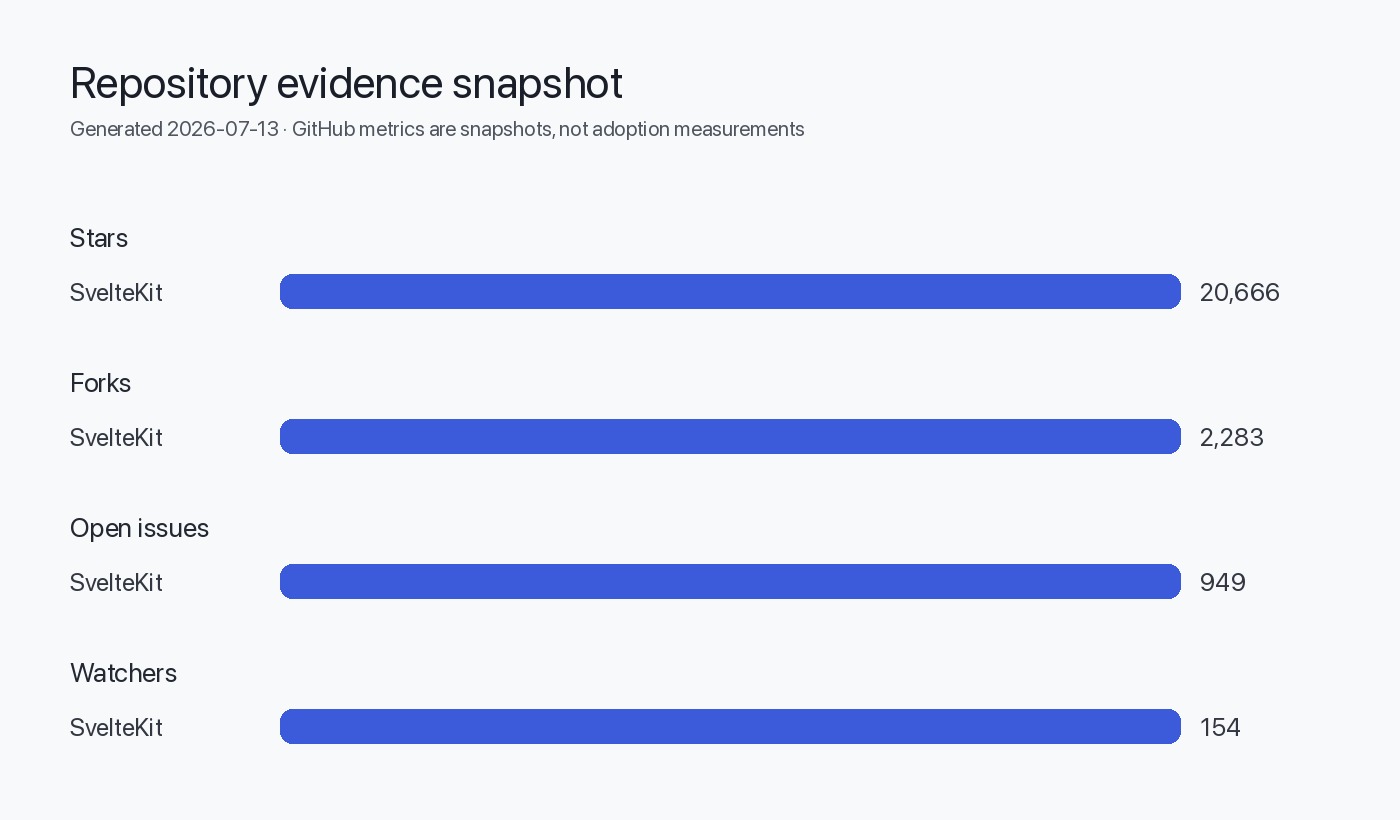
- SvelteKit repository metadata (sveltejs/kit) and latest release information were supplied as repository facts (star/fork counts, timestamps, README extract). (SvelteKit repo, release)
- Inferred: Many SvelteKit deployments pair frontend code with backend services. If any such backends are Go services using OpenRun, they may be impacted. This is an architectural inference, not a claim that SvelteKit itself includes OpenRun.
- Inferred: The attack vector in the advisory relies on browsers interpreting Location headers that start with a double-slash as an external target.
Limitations:
- This briefing relies only on the supplied advisory and repository metadata. It does not include independent scanning of your codebase, cloud services, or third-party providers.
- We do not claim any SvelteKit code is vulnerable — the advisory does not name SvelteKit.
Sources
- SvelteKit canonical repository: https://github.com/sveltejs/kit
- SvelteKit latest GitHub release: https://github.com/sveltejs/kit/releases/tag/%40sveltejs/kit%402.69.2
- GitHub Security Advisory GHSA-h5g6-xmh4-hc37: https://github.com/advisories/GHSA-h5g6-xmh4-hc37
FAQ
Does this advisory mean SvelteKit is vulnerable?
No. The advisory specifically names the Go package github.com/openrundev/openrun (OpenRun). SvelteKit is not named in the advisory, so you should not assume SvelteKit itself is affected.
How can I check if my projects use the affected OpenRun package?
Search your repositories for "github.com/openrundev/openrun" (e.g., grep -R "github.com/openrundev/openrun" .) and run go list -m all in Go modules to enumerate dependencies. Also check container images and vendor directories.
What versions are vulnerable and which version fixes the issue?
The advisory lists vulnerable versions as < 0.17.7 and states that the issue is patched in version 0.17.7.
What short-term mitigations are available if we cannot upgrade immediately?
Apply reverse-proxy or WAF rules to block or normalize Location headers that begin with "//", implement redirect target whitelisting, and review redirect-validation code to reject //host-style paths.
Can I run the PoC from the advisory against third-party services to test them?
No. Do not run PoCs against services you do not own or do not have authorization to test. Reproduce PoCs only in isolated, authorized test environments.
Where can I read the advisory and confirm details?
The full advisory is available at the GitHub Advisory page: https://github.com/advisories/GHSA-h5g6-xmh4-hc37